Journal — Systems
One scene list, five years later
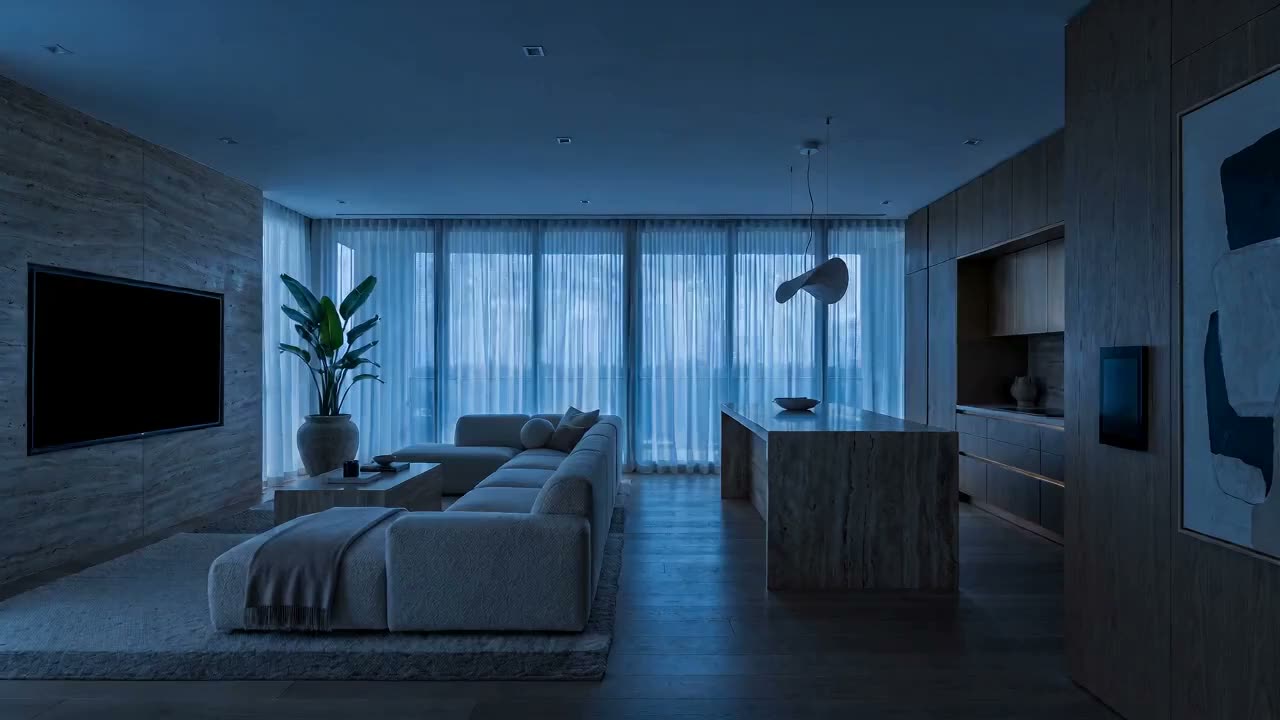
We handed a house over in 2021 with eleven lighting scenes, all commissioned, balanced and demonstrated. We went back this spring and asked the owners which ones they use. The answer was two.
Eleven scenes at handover
The list was the one every integrator produces, because it is the list that sounds complete in a design meeting: Welcome, Entertain, Dine, Relax, Read, Cook, Cinema, Clean, Away, Night, Morning. Each was tuned over two evenings, each had a keypad button, each was demonstrated at handover to a client who nodded and said it was wonderful. It was wonderful. It was also, within about six weeks, mostly unused.
The two that survived
Night and Morning. Nothing else. Both are pressed daily, five years on, and both share a property none of the other nine had: they describe a moment in time rather than an activity. You always know whether it is night. You do not always know whether what you are about to do counts as entertaining.
Why the other nine died
- They were named for activities. Nobody walks to a keypad thinking "I am now dining." They think it is a bit bright in here.
- They required a decision. Eleven buttons means reading eleven labels and choosing. That is slower than reaching for the nearest switch, and slower loses every time.
- They were on the wrong wall. Entertain lived by the kitchen door because that is where the keypad fitted. The moment you want it, you are already across the room with a bottle in each hand.
- They were tuned in an empty house. No rugs, no art, no curtains, no furniture. Every one of those changes how a room takes light. By the time the house was furnished, half the scenes were subtly wrong and nobody re-tuned them.
A scene that needs a decision is not a scene. It is a menu.
What we changed
- Four scenes at handover. Never more. Additional scenes are added later, by request, once the house has been lived in. Nobody has ever asked us for an eleventh.
- Name them for moments, not rooms or activities. Morning, Evening, Night, Away. A guest can work those out unprompted, which is the actual test.
- A ninety-day re-tune, written into the contract. We come back to a furnished, occupied house and set the levels again. This is the single change that has made the most difference, and it costs us one evening.
- The keypad test. If we cannot explain a button to a visitor in four words or fewer, the button comes off the keypad. Blank space on a keypad is not a wasted opportunity, it is a design decision.
The wider point
Smart home specifications are written at the point of maximum enthusiasm and judged at the point of maximum ordinariness — a wet Tuesday, arms full, three years in. The features that survive that are the ones that ask nothing of you. Everything else is a demonstration, and a demonstration is not a system. We would rather hand over four things that get used than eleven things that get admired once.