Journal — Structure
Sixty-two piles into rock
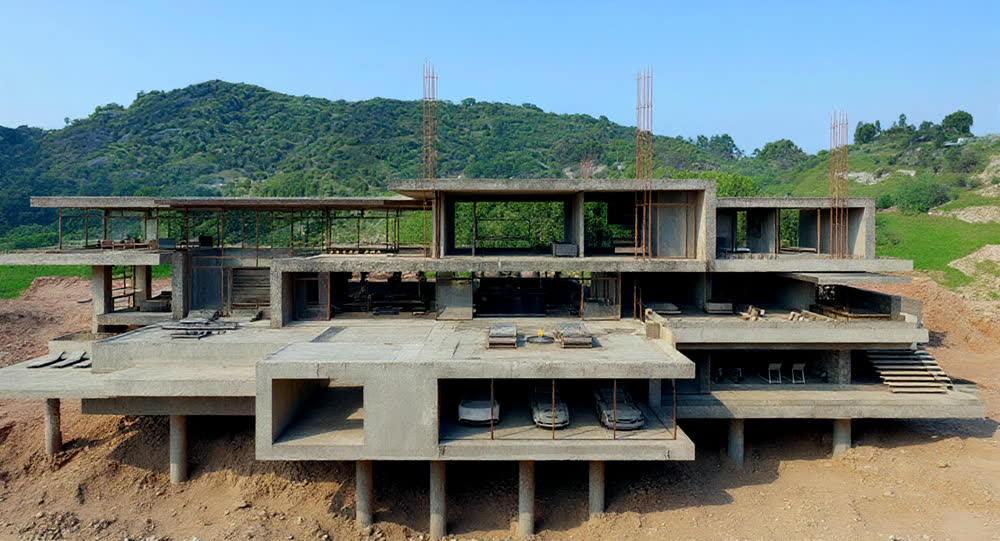
The Jebel Vista substructure took four months longer than the programme said it would. Every one of those weeks was described, in outline, in a ground investigation report that had been issued, circulated, read by nobody in detail, and priced by no one at all.
What the report said
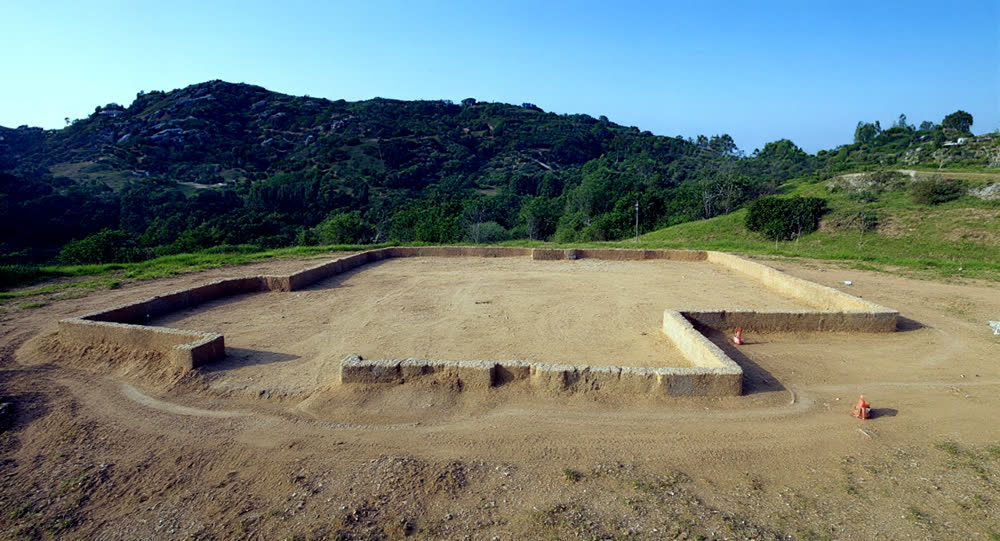
Two boreholes on a sloping 1,900 m² plot. Weathered rock at approximately nine metres. Overburden described as dense sand and gravel with cemented horizons. Rockhead described, in a single word that should have stopped us, as variable.
That word is doing an enormous amount of work in a geotechnical report. On a flat site it usually means a metre either way. On a 14° slope with two boreholes eighty metres apart, it means the engineer is telling you honestly that they do not know, and that the risk of not knowing is now yours.
What we found at six metres
The first pile bore met refusal at just under six metres, three metres above the predicted rockhead. That is good news if it is rock. It was not rock. It was a band of cemented conglomerate perhaps 800 mm thick, sitting on more sand — a floater, hard enough to stop a rig and far too thin to found anything on.
Two bores later we had the opposite problem: no refusal at all at fourteen metres on the downhill corner, where the weathered profile ran much deeper than either borehole suggested. Across the footprint the actual rockhead varied by more than eight metres. The design assumed one.
From friction to end-bearing
The tender design was 600 mm CFA piles working largely in shaft friction, on the assumption of a consistent granular profile over a predictable rockhead. Neither assumption survived. Friction piles in a profile you cannot characterise are a guess with a load on top of it.
We stopped, and re-designed to 900 mm rotary bored piles socketed a minimum of two diameters into competent rock, with every pile toe proven rather than assumed. That is a slower, heavier, more expensive method, and it is the correct one when the ground will not tell you a consistent story.
Where the four months went
- Three weeks stopped. From refusal on pile one to an agreed way forward. Most of that was not analysis, it was waiting for a supplementary investigation to be procured, mobilised and reported.
- Five weeks re-designing and re-approving. A new pile schedule, new loads into the pile caps, a revised raft, and the approvals that go with all three.
- Three weeks demobilising the CFA rig and mobilising a rotary rig. The two are not interchangeable and the second was not sitting idle waiting for us.
- Six weeks of slower production. A 900 mm socketed pile is not a 600 mm CFA pile. The rate per day fell by more than half, and rock sockets do not negotiate.
Only the last of those is really about the ground. The other eleven weeks are about not having a plan for a condition the report had already flagged.
The ground has no contingency. Your programme has to carry it instead.
What we do differently now
- Six boreholes minimum on a sloping site. Two is enough to draw a line between them and not enough to know anything. The extra investigation on Jebel Vista would have cost a fraction of one week of the delay.
- We read the GI report before we price, and we price the variance. If the report says variable, the tender carries a defined provisional sum with a stated trigger, not an optimistic rate and a hope.
- Probe holes at pile positions on the critical grid before the rig is committed, so a method change happens on paper rather than with a rig standing on the site.
- A named method fallback in the programme. If refusal occurs above the predicted rockhead, the alternative rig, its availability and its rate are already agreed. We are not procuring under pressure.
None of this makes difficult ground cheap. It makes it a known cost arriving on a known date, which is the only thing a client can actually plan around.